Passive IR detectors ID
In a nutshell. A passive infrared detector emits nothing — it "sees" the thermal radiation of moving warm bodies. A person with a body temperature of about 36 °C radiates in the 8–14 µm range, and the sensor registers the change of this background as the person moves. That is why stationary objects — trees, parked vehicles, standing animals — do not cause an alarm, while a person walking past does. The ID series is used to protect perimeters, long stretches of ground, building facades, driveways and indoor areas.
Physical principle of operation
Any body above absolute zero emits thermal infrared radiation. A person with a body temperature of about 36 °C radiates most intensely in the 8–14 µm band — the "atmospheric window", in which air is virtually transparent to IR waves.
At the heart of a passive detector is a pyroelectric sensor: it reacts not to the radiation level but to its change. A Fresnel lens divides the field of view into sectors, and as a person moves, the flux of thermal waves at the sensor periodically strengthens and weakens — this is what generates the electrical signal. Stationary objects (trees, motionless animals) radiate constantly and unchanged, so the detector does not "see" them.
Two-threshold signal processing and comparison with the background level allow the warm body of a person to be distinguished from natural interference — sun-heated surfaces, precipitation, temperature swings.
| Device | Protected zone length | Detection zone shape | Operating temperature |
|---|---|---|---|
| ID2-50 | 50 metres | Corridor | -40..+55C |
| ID2-50 variant 5 (Arctic) | 50 metres | Corridor | -55..+55C |
| ID2-50Sh | 50 metres | Curtain | -40..+55C |
| ID2-50Sh variant 5 (Arctic) | 50 metres | Curtain | -55..+55C |
| ID2-70 | 70 metres | Corridor | -40..+55C |
| ID2-70 variant 5 (Arctic) | 70 metres | Corridor | -55..+55C |
| ID2-70Sh | 70 metres | Curtain | -40..+55C |
| ID2-70Sh variant 5 (Arctic) | 70 metres | Curtain | -55..+55C |
| ID2-100 | 100 metres | Corridor | -40..+55C |
| ID2-100 variant 5 (Arctic) | 100 metres | Corridor | -55..+55C |
| ID2-12E variant 5 (Arctic) | 12 metres | Fan | -55..+55C |
| ID-12E | 12 metres | Fan | -40..+45C |
| ID-40 | 40 metres | Corridor | -40..+55C |
| ID-50 | 50 metres | Corridor | -40..+55C |
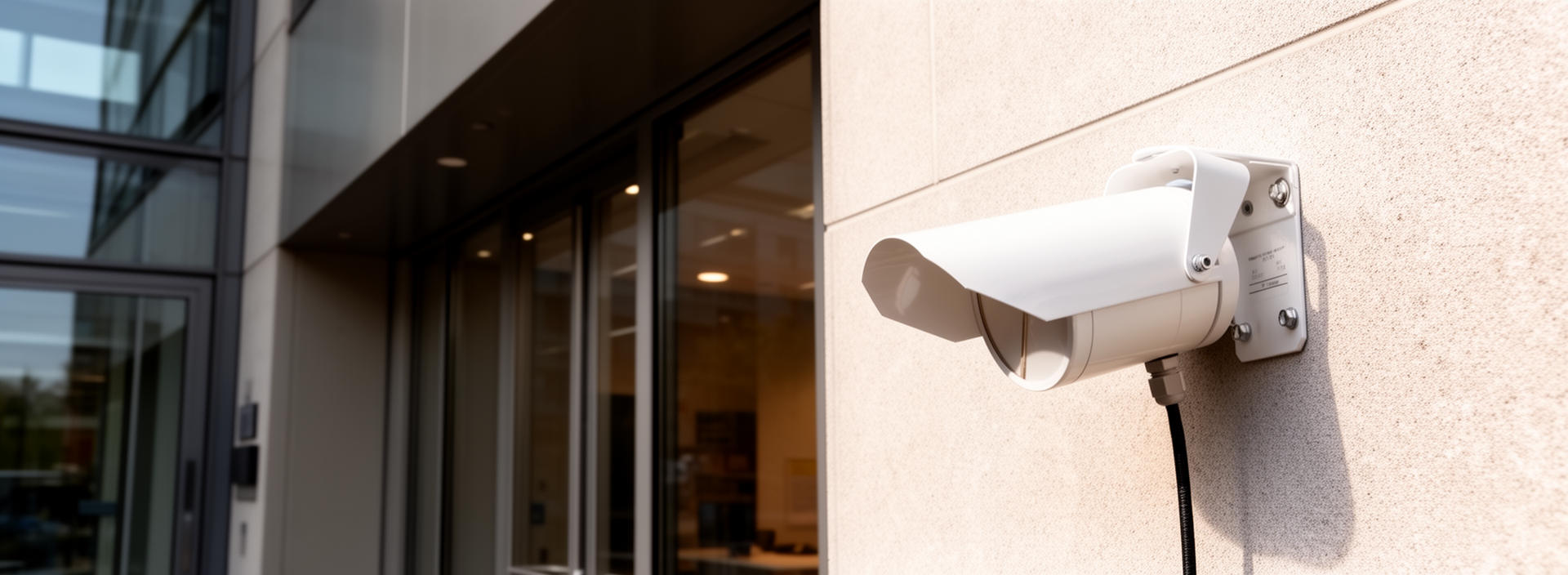
Passive IR detectors work on the principle of thermal contrast: they register the difference between the temperature of an intruder's body and the surrounding background. They are used to protect perimeters, long stretches of ground, facades of residential and industrial buildings, and also indoors.
Key features:
- Wide operating temperature range — from -55℃ to +55℃, stable operation in difficult interference conditions;
- Universal connection — the dry-contact output lets the detector be connected to any alarm panel or loop collector.
Detection modes of the ID2 series detectors:
- Two-threshold main mode — an alarm is raised when the intruder crosses both beams of the radiation pattern, regardless of the direction of movement;
- Two-threshold with direction detection — an alarm is raised only when the intruder moves in the specified direction;
- Single-threshold — an alarm is raised when at least one beam is triggered. The mode captures attempts to breach the line: the detector will trigger even if the intruder entered the range of a single beam and turned back.
Types of detection zone
Corridor — two diverging "beams". Optimal for face-to-face or successive sensor installation: the dead zone near the detector is covered by the neighbouring device.
Top view:
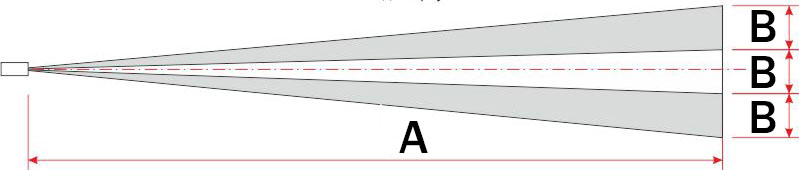
Side view:

| Device | A | B | C |
|---|---|---|---|
| ID2-100 | 100 metres | 0.7 metre | 1.4 metres |
| ID2-70 | 70 metres | 1.33 metres | 2 metres |
| ID/ID2-50 | 50 metres | 1 metre | 2 metres |
| ID-40 | 40 metres | 1.33 metres | 2.5 metres |
Curtain — two diverging "beams" plus additional beams covering the dead zone near the sensor. Optimal when the installation point cannot be covered by a neighbouring sensor.

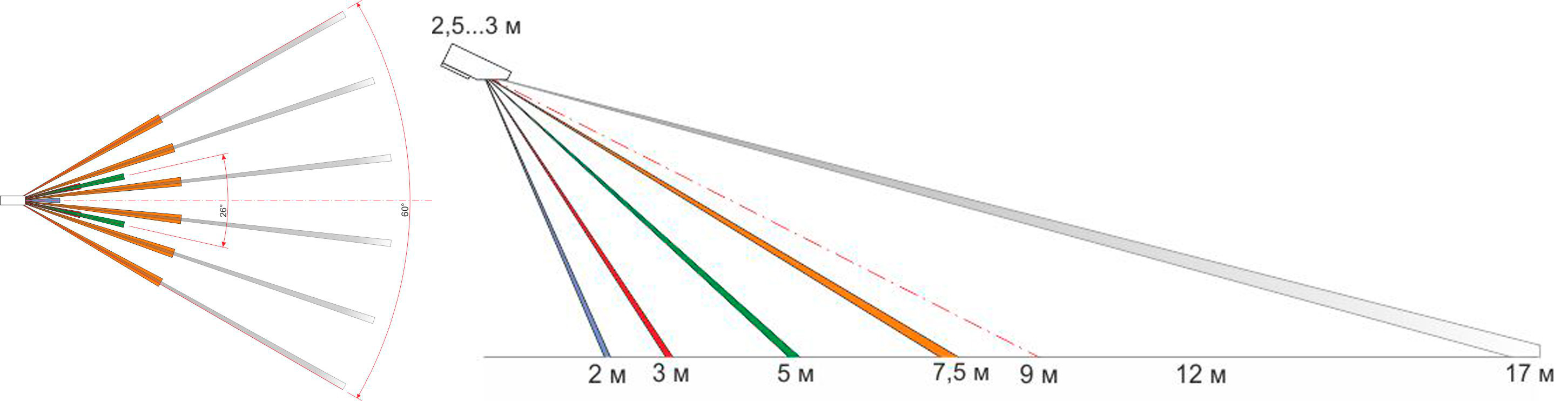
Fan — many diverging beams in several planes. Optimal for protecting small yards, driveways, gates and wickets.
Available variants:
- "variant 5" — extended temperature range from -55℃ to +55℃ (ID-12E — up to +45℃);
- "-1" — two loops transmitting the "Alarm" notification, for highly noise-immune security lines.
Technical Specifications
| Parameter | ID2-50 / ID2-70 / ID2-100 | ID2-50Sh / ID2-70Sh | ID2-12E / ID-12E |
|---|---|---|---|
| Supply voltage, V | 8–28 | 8–28 | 8–28 |
| Current consumption (standby), mA | ≤ 15 | ≤ 15 | ≤ 15 |
| Protection rating | IP65 | IP65 | IP65 |
| Housing material | Metal | Metal | Metal |
| Operating temperature, °C | −40…+55 (v.5: −55…+55) | −40…+55 (v.5: −55…+55) | ID2-12E: −40…+55 (v.5: −55…+55); ID-12E: −40…+45 (v.5: −55…+45) |
| Mode indication | "Alarm", "Fault" (can be disabled) | "Alarm", "Fault" | "Alarm", "Fault" |
| Smooth threshold adjustment | Yes | Yes | Yes |
| Detection modes | 4 | 4 | 4 |
| Dimensions (L×W×H), mm | ID2-50: 215×107×71; ID2-70: 210×96×128; ID2-100: 215×71×115 | ID2-50Sh: 215×107×71; ID2-70Sh: 210×96×128 | ID2-12E: 150×75×80; ID-12E: 150×72×85 |
| Weight, kg | ≤ 0.55 (ID2-50, ID2-100); ≤ 0.75 (ID2-70) | ≤ 0.55 (ID2-50Sh); ≤ 0.75 (ID2-70Sh) | ≤ 0.35 |
| Alarm duration, s | ≥ 5 | ≥ 5 | ≥ 5 |
| Ready time after power-on, s | ≤ 60 | ≤ 60 | ≤ 60 |
| Service life, years | ≥ 10 | ≥ 10 | ≥ 10 |
| MTBF, h | 60,000 | 60,000 | 60,000 |
Documentation
| Device | Passport (PS) | Operation manual (RE) |
|---|---|---|
| ID2-50 | PS | RE |
| ID2-50 variant 5 | PS | RE |
| ID2-50Sh | PS | RE |
| ID2-70 | PS | RE |
| ID2-100 | PS | RE |
| ID2-12E variant 5 | PS | RE |
| ID-12E | PS | RE |
| ID-40 | PS | [RE]((/docs/%D0%9F%D0%B0%D1%81%D1%81%D0%B8%D0%B2%D0%BD%D1%8B%D0%B5%20%D0%98%D0%9A-%D0%B8%D0%B7%D0%B2%D0%B5%D1%89%D0%B0%D1%82%D0%B5%D0%BB%D0%B8%20%D0%98%D0%94/%D0%98%D0%94-40%2840-1%2C%20%D0%98%D0%94-40%20%D0%B8%D1%81%D0%BF.%205%29%2C%D0%98%D0%94-50%2850-1%29%20%D0%A0%D0%AD%202025.10.24.pdf) |
| ID-50 | PS | [RE]((/docs/%D0%9F%D0%B0%D1%81%D1%81%D0%B8%D0%B2%D0%BD%D1%8B%D0%B5%20%D0%98%D0%9A-%D0%B8%D0%B7%D0%B2%D0%B5%D1%89%D0%B0%D1%82%D0%B5%D0%BB%D0%B8%20%D0%98%D0%94/%D0%98%D0%94-40%2840-1%2C%20%D0%98%D0%94-40%20%D0%B8%D1%81%D0%BF.%205%29%2C%D0%98%D0%94-50%2850-1%29%20%D0%A0%D0%AD%202025.10.24.pdf) |